Quick Answer: Most $1 bills are worth face value, but certain rare varieties sell for $50 to $15,000+. The most valuable include the 1896 "Educational" silver certificate ($150-$3,000+), the 1928C-1928E silver certificates ($25-$800+), modern star notes with low print runs ($5-$150), error bills ($25-$2,500+), and bills with fancy serial numbers like solids or ladders ($100-$10,000+).
That crumpled dollar in your wallet is almost certainly worth exactly one dollar. But some $1 bills, both vintage and modern, carry premiums that can reach into the thousands. The key is knowing which features to look for.
This guide covers every type of valuable $1 bill, from 19th-century large-size notes to bills printed last year. Whether you found an old dollar in a dresser drawer or want to check the change from your last purchase, use this as your reference.
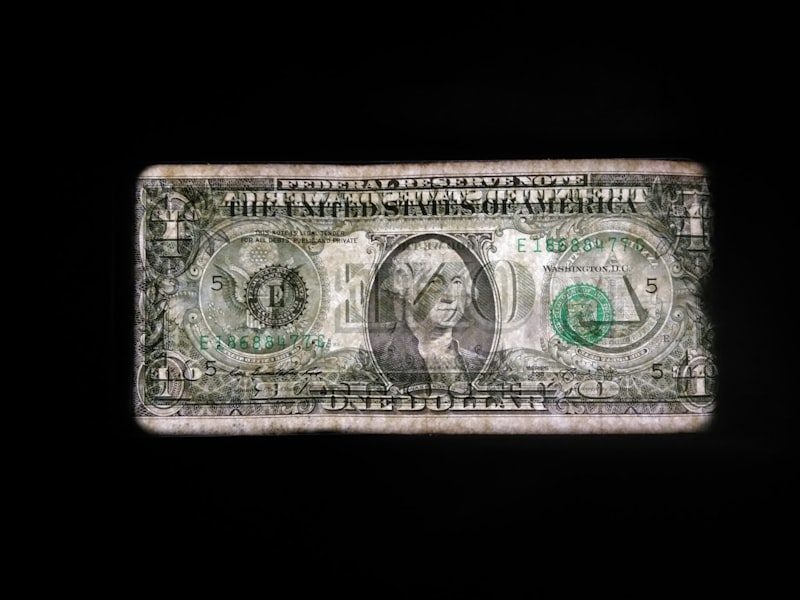
Most Valuable $1 Bills at a Glance
Before diving into the details, here is a quick-reference table of the $1 bills collectors pay the most for. Values reflect recent Heritage Auctions realized prices, dealer pricing, and PMG Population Reports for 2025-2026.
| Bill Type | Era | Circulated Value | Uncirculated Value | What Makes It Special |
|---|---|---|---|---|
| 1896 "Educational" Silver Cert | Large-size | $150-$600 | $1,500-$3,000+ | Artistic masterpiece, only ~8,000 survive |
| 1899 "Black Eagle" Silver Cert | Large-size | $60-$200 | $250-$625+ | Iconic eagle vignette |
| 1928C-1928E Silver Cert | Small-size | $25-$75 | $300-$800+ | Genuinely scarce series |
| 1935A Hawaii Overprint | WWII issue | $20-$50 | $75-$250 | Emergency wartime currency |
| Modern star note (low run) | 2009-present | $3-$15 | $25-$150 | Print runs under 640,000 |
| Solid serial (e.g., 77777777) | Any era | $3,500-$10,000+ | $5,000-$30,000+ | Extremely rare pattern |
| Ladder serial (12345678) | Any era | $300-$3,000 | $1,000-$12,000+ | One of the most sought-after patterns |
| Major printing error | Any era | $50-$500 | $200-$2,500+ | Depends on error type and severity |
Large-Size $1 Bills Worth Serious Money
Large-size notes were printed before 1929 and measure roughly 7.4" x 3.1", about 40% bigger than modern currency. These bills are prized for elaborate, hand-engraved designs that later small-size notes never matched.
1896 "Educational" Silver Certificate
The 1896 $1 silver certificate is ranked among the 100 Greatest American Currency Notes by numismatic historians. The face depicts "History Instructing Youth," an allegorical scene unlike anything on modern currency. The back features portraits of George and Martha Washington, making it the only U.S. bill to show both.
- Estimated survivors: 7,000-9,000 across all grades
- Very Good condition: $150-$250
- Very Fine condition: $400-$600
- Uncirculated (MS 63): $1,500-$3,000+
- Gem Uncirculated (MS 65+): $5,000-$10,000+
The Educational series also includes a $2 note ($500-$10,000+) and a $5 note ($800-$15,000+), but the $1 is the most accessible entry point for collectors.
1899 "Black Eagle" Silver Certificate
The 1899 $1 silver certificate features a large bald eagle with spread wings across the face, earning its collector nickname. The Bureau of Engraving and Printing produced these from 1899 through 1923 with multiple signature combinations.
| Signature Combination | VG (8) | VF (25) | EF (40) | MS 63 |
|---|---|---|---|---|
| Lyons-Roberts | $60-$80 | $150-$200 | $250-$350 | $525-$625 |
| Vernon-Treat | $60-$80 | $150-$200 | $250-$350 | $525-$625 |
| Vernon-McClung | $200-$400 | $600-$1,200 | $2,000-$3,500 | $5,000-$6,500 |
| Napier-Thompson | $150-$300 | $500-$1,000 | $1,500-$2,500 | $3,000-$4,000 |
| Parker-Burke | $60-$80 | $150-$200 | $250-$350 | $525-$625 |
| Speelman-White | $60-$80 | $130-$175 | $225-$325 | $500-$600 |
The Vernon-McClung and Napier-Thompson combinations are by far the scarcest and most valuable.
Other Valuable Large-Size $1 Notes
| Type | Date Range | Circulated | Uncirculated |
|---|---|---|---|
| Legal Tender ("United States Note") | 1862-1869 | $100-$400 | $1,000-$2,500+ |
| Treasury Note (Coin Note) | 1890-1891 | $200-$500 | $2,000-$5,000+ |
| 1923 Silver Certificate | 1923-1928 | $25-$60 | $150-$400 |
| National Bank Notes ($1) | 1865-1928 | $75-$300+ | $500-$2,000+ |
National Bank Notes are particularly interesting because they were issued by individual banks. Notes from small-town banks that issued few sheets can be worth multiples of more common examples.
Small-Size $1 Silver Certificates Worth Money
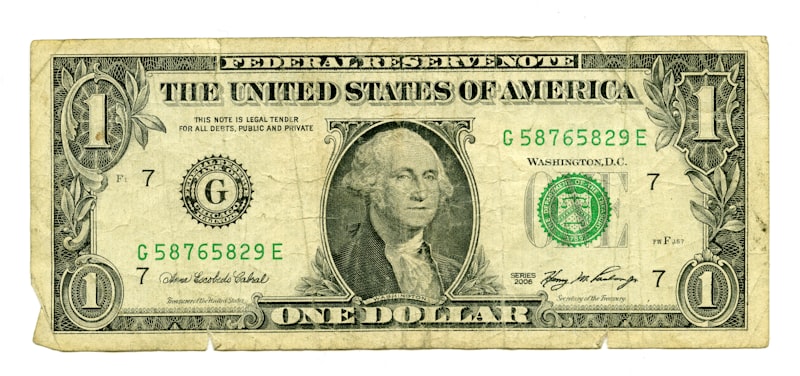
When the U.S. switched to the current smaller note size in 1928, $1 silver certificates continued to be issued with a distinctive blue seal. Most are common, but a few series stand out.
The Scarce 1928 Series
The 1928 series of $1 silver certificates includes six sub-varieties (1928, 1928A through 1928E). While the 1928 and 1928A are relatively affordable, the later letters are genuinely rare.
| Series | Circulated | Uncirculated | Relative Scarcity |
|---|---|---|---|
| 1928 | $5-$10 | $40-$75 | Uncommon |
| 1928A | $5-$10 | $50-$100 | Uncommon |
| 1928B | $8-$15 | $75-$150 | Scarce |
| 1928C | $25-$50 | $300-$500 | Rare |
| 1928D | $30-$75 | $400-$700 | Rare |
| 1928E | $50-$100 | $500-$800+ | Very rare |
The 1928E is the key date of the entire small-size silver certificate series. Fewer than 100,000 were printed, and survival rates are low. If you find one in your collection, it is worth professional grading by PMG or PCGS Currency.
1935A Hawaii and North Africa Overprints
During World War II, the Bureau of Engraving and Printing produced special emergency currency with distinctive overprints:
Hawaii Overprint (brown seal): Issued to military personnel stationed in Hawaii after Pearl Harbor. If the islands were captured, the government could demonetize these notes without affecting the mainland money supply.
- Circulated: $20-$50
- Uncirculated: $75-$250
- Star notes: $100-$500+
North Africa Overprint (yellow seal): Used by troops during the North Africa campaign. Less common than the Hawaii notes.
- Circulated: $25-$60
- Uncirculated: $100-$300
1935 and 1957 Series (Common but Check for Varieties)
The 1935 and 1957 series silver certificates were produced in enormous quantities. Most circulated examples are worth $1.25 to $5. However, these bills can still carry meaningful premiums if they have:
- Star note serial numbers (2x to 5x regular issue values)
- Fancy serial numbers (see the section below)
- Printing errors (misalignment, ink smears, missing elements)
Use the star note lookup tool to check your bill's print run and rarity.
Modern $1 Bills Worth Money (1963-Present)
You do not need a vintage bill to find value. Modern Federal Reserve Notes with the right features can be worth far more than face value.
Star Notes With Low Print Runs
Star notes are replacement bills identified by a star symbol (★) at the end of the serial number. The Federal Reserve prints them in runs of varying size. When a run is small, the resulting notes become collectible.
| Print Run Size | Typical Premium | Example |
|---|---|---|
| Under 160,000 | 10x-50x face value | $10-$50+ per note |
| 160,000-320,000 | 5x-15x face value | $5-$15 per note |
| 320,000-640,000 | 2x-5x face value | $2-$5 per note |
| 640,000-3,200,000 | 1x-2x face value | $1-$2 per note |
| Over 3,200,000 | Face value | $1 |
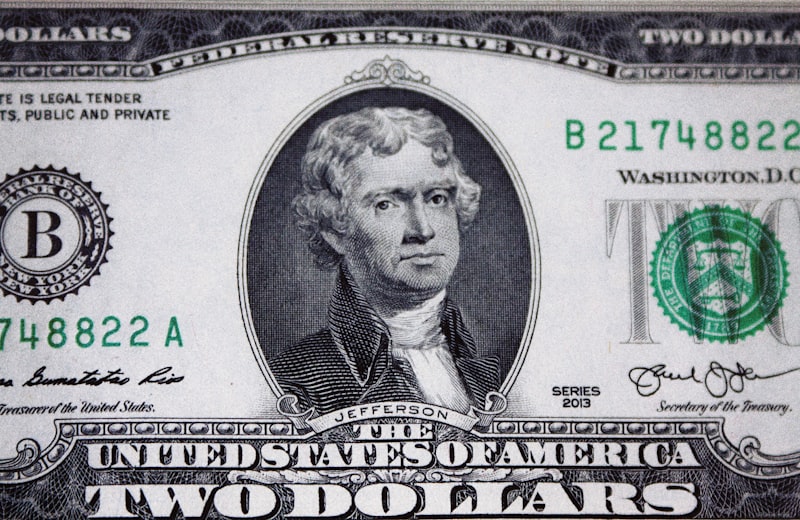
The most famous modern rarity is the 2013 B Series $1 star note with a known duplicate serial number error. The Bureau of Engraving and Printing accidentally printed two runs with the same serial number range. Matched pairs (two notes with the same serial number) have sold for $2,000 to $25,000 depending on condition.
Check your star note's print run using our Star Note Lookup Tool to see if yours falls into a rare category.
Fancy Serial Numbers
Fancy serial numbers are the single most accessible way for casual collectors to find valuable modern $1 bills. Every bill in your wallet has an eight-digit serial number, and certain patterns are highly collectible.
| Pattern | Example | Approximate Value |
|---|---|---|
| Solid (all same digit) | 77777777 | $3,500-$30,000+ |
| Ladder (ascending) | 12345678 | $1,000-$12,000+ |
| Ladder (descending) | 87654321 | $500-$8,000+ |
| Low serial (#1-#100) | 00000007 | $300-$15,000 |
| High serial (99999900+) | 99999999 | $250-$8,000+ |
| Binary (two digits only) | 10010010 | $200-$5,000+ |
| Radar/Palindrome | 12344321 | $40-$2,500+ |
| Repeater | 78787878 | $25-$900+ |
| Birthday (MMDDYYYY) | 07041776 | $50-$7,500 |
| Trinary (three digits) | 12121221 | $15-$200 |
Solid and ladder serial numbers are the most valuable because they are statistically the rarest. Out of the 96 million possible eight-digit combinations, only nine are solid numbers (11111111 through 99999999) and only one is a perfect ascending ladder.
Use the Fancy Serial Number Checker to instantly evaluate your bill's serial number.
Error Bills
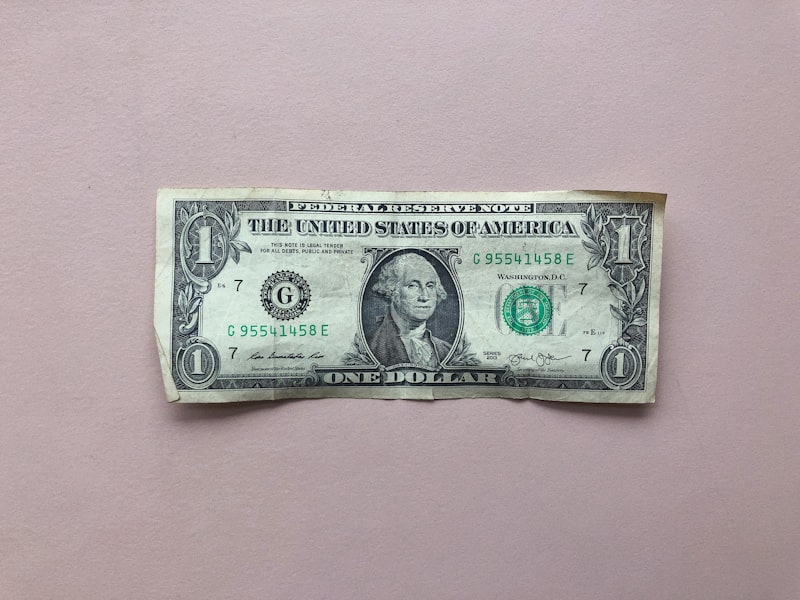
Printing errors turn ordinary $1 bills into collectible oddities. The Bureau of Engraving and Printing catches most defective sheets, but some make it into circulation. Learn more in our error bills worth money guide.
| Error Type | Description | Value Range |
|---|---|---|
| Inverted back | Back printed upside down | $300-$2,500+ |
| Missing overprint | Serial number and/or seal absent | $200-$1,500+ |
| Mismatched serial numbers | Front serials do not match | $150-$800 |
| Major misalignment | Design shifted significantly off-center | $50-$500 |
| Ink smear/transfer | Visible ink errors on face or back | $25-$200 |
| Cutting error | Cut into adjacent note | $50-$500 |
| Double denomination | Printed on two different denomination sheets | $10,000-$50,000+ |
| Blank reverse | One side completely unprinted | $200-$1,000+ |
Double denominations are the holy grail of error collecting. A $1 bill printed on the back of a $5 or $10 note can sell for five figures at auction.
How to Check If Your $1 Bill Is Valuable
Follow this five-step process to evaluate any dollar bill quickly.
Step 1: Identify the Type
Look at the top of the bill's face:
- "Silver Certificate" with a blue seal = pre-1964 silver certificate
- "United States Note" with a red seal = legal tender note
- "Federal Reserve Note" with a green seal = modern note (1963-present)
Silver certificates and legal tender notes are older and potentially more valuable. Check the series year printed near Washington's portrait.
Step 2: Check for a Star Note
Look at the end of the serial number. If the last character is a star (★) instead of a letter, you have a replacement note. Star notes from any era carry a premium, with modern low-run stars being the most commonly found valuable variety.
Step 3: Examine the Serial Number
Look for any of the fancy patterns listed above. Even partial patterns like "near-solids" (77777778) or "near-ladders" (12345679) can carry modest premiums with the right buyer.
Step 4: Look for Errors
Hold the bill up to a light and examine both sides carefully. Check for:
- Misaligned printing (design shifted visibly off-center)
- Missing elements (no serial number, no seal, no back printing)
- Ink smears or extra ink marks
- Unusual paper (folds, creases, or tears that occurred before printing)
Step 5: Scan with CashScan
Use the CashScan app to photograph your bill and get an instant identification of the series, denomination, and any notable features. The app flags star notes, highlights the serial number for pattern checking, and provides historical context.
Where to Sell Valuable $1 Bills
Once you have identified a potentially valuable bill, here are the best places to sell, ranked by the type of note.
High-Value Notes ($100+)
- Heritage Auctions: The largest currency auction house. Best for rare vintage notes, high-grade examples, and major errors. Consignment fees apply but the buyer pool is unmatched.
- Stack's Bowers: Another major auction house for premium currency.
- Professional grading first: For notes worth $100+, consider getting them graded by PMG or PCGS Currency. A graded note in a tamper-evident holder sells for more than a raw note.
Mid-Value Notes ($10-$100)
- eBay: Check "Sold" listings for comparable notes to set realistic pricing. eBay has the largest buyer pool for mid-range collectible currency.
- Reddit: r/papermoney and r/Coins4Sale have knowledgeable, active buyer communities.
Low-Value Notes ($2-$10)
- Local coin shops: Quick cash, though expect 50-70% of retail value.
- Currency shows: Good for selling small lots in person without shipping hassles.
- Online forums: Facebook groups dedicated to paper money collecting.
For a detailed walkthrough, see our complete guide to where to sell old paper money.
Common $1 Bills That Are NOT Valuable
Let's save you some time. These $1 bills are frequently mistaken for rarities but are worth face value or very close to it:
- Any circulated 1935 or 1957 silver certificate without a star or fancy serial: Worth $1.25-$3
- Bicentennial $2 bills (1976): Common. See our $2 bill value guide for exceptions.
- "Web notes" without confirmation: Genuine web notes are valuable, but many bills misidentified as web notes are standard issues.
- Bills with sequential serial numbers: Two bills with consecutive serials are not especially rare unless they are also star notes or have other features.
- Worn, damaged, or taped bills from any era: Condition matters enormously. Heavy damage eliminates most collector value.
The takeaway: condition, rarity, and special features drive value. Age alone does not make a $1 bill valuable.
Frequently Asked Questions
What $1 bills are worth the most money?
The most valuable $1 bills are large-size notes from before 1929. The 1896 "Educational" silver certificate can sell for $3,000+ in uncirculated condition. The 1899 "Black Eagle" with rare signature combinations reaches $5,000-$6,500. Among modern bills, $1 notes with solid serial numbers (like 77777777) or major printing errors can bring $3,500 to $30,000+.
How do I know if my $1 bill is rare?
Check three things: the series year (older is potentially more valuable), the serial number (look for star symbols and fancy patterns like ladders, solids, or low numbers), and the bill's condition (uncirculated notes are worth significantly more). You can also scan your bill with the CashScan app for instant identification.
Are old $1 bills worth more than face value?
Not always. Billions of 1935 and 1957 silver certificates were printed, and most circulated examples are worth only $1.25 to $3. However, bills from scarce series (1928C-1928E, pre-1929 large-size notes) and bills with star notes, fancy serial numbers, or errors can be worth significantly more.
What year $1 bills are worth money?
The most valuable years for $1 bills are 1862-1869 (Legal Tender Notes), 1886-1899 (silver certificates with artistic designs), 1928C-1928E (scarce small-size silver certificates), and 1935A with Hawaii or North Africa overprints. For modern bills, the year matters less than the serial number pattern, star note status, and print run size.
Are $1 star notes worth anything?
It depends on the print run. Star notes from runs under 640,000 are considered collectible and can be worth $2 to $50+ depending on condition and scarcity. Runs under 160,000 are genuinely rare and can bring $10 to $150+. Most star notes from runs over 3.2 million are worth face value. Check your star note's run size with a star note lookup tool.
What serial numbers on $1 bills are worth money?
The most valuable serial number patterns are solid numbers (all eight digits the same, worth $3,500+), perfect ladders (12345678, worth $1,000+), and extremely low numbers (00000001 through 00000100, worth $300-$15,000). Radar/palindrome numbers, repeaters, and binary numbers also carry premiums. Use the Fancy Serial Number Checker to evaluate your bill's serial instantly.
Should I get my $1 bill graded?
Professional grading by PMG or PCGS Currency costs $20-$35 per note. It makes financial sense for notes worth $50 or more. Grading authenticates the note, assigns a precise numerical grade, and seals it in a protective holder, all of which increase buyer confidence and selling price.
How can I find rare $1 bills?
Check your change, search through bank-wrapped straps of $1 bills, visit estate sales, and look through inherited collections. For star notes, request $1 bills from your bank and examine the serial numbers. Many collectors also hunt for fancy serial numbers by requesting new, uncirculated bills. The odds of finding a valuable bill are low on any single attempt, but persistence pays off.
Conclusion
The $1 bill is the most common denomination in circulation, which means most are worth exactly face value. But hidden among the billions of ordinary dollars are notes that collectors will pay significant premiums for: vintage silver certificates with artistic designs, scarce series like the 1928E, modern star notes from low print runs, bills with fancy serial numbers, and printing errors that slipped past quality control.
The fastest way to check any $1 bill is to look at three things: the series year, the serial number, and the overall condition. That 10-second check could reveal a note worth $10, $100, or far more. Also explore our guides to old $100 bills worth money, old $20 bills worth money, and rare dollar bills worth money if you have other denominations to evaluate.
Have a $1 bill you want to check? Scan it with CashScan to instantly identify the series, check for star note status, and learn whether your bill has collectible features.
Download CashScan free on the App Store to identify any banknote. Also check out CoinID for coin identification.